Recommended Charity Fund Update: August 2026
This month, thanks to your generosity, ACE has awarded $1,365,823 from our Recommended Charity Fund to our Recommended Charities. We are eager to see the positive change these charities can accomplish for farmed and wild animals over the next six months with this funding.
In February, ACE’s Recommended Charity Fund awarded $1,897,538 to our Recommended Charities. Those organizations shared how they used their grants to make a positive impact on animals, and we’re thrilled to share their achievements with you. Please enjoy the highlights below, made possible with your support. Thank you!
Our Greatest Needs Fund is another way to support high-impact charities that reduce the suffering of some of the world’s most neglected animals. Much of the inspiring work highlighted below depends on grants from this fund. Thank you for making these achievements for farmed and wild animals possible!
Recommended Charity Updates
Discover what ACE’s Recommended Charities have shared about their accomplishments for animals in the first half of 2026 with support from the Recommended Charity Fund.
Animal Welfare Observatory
$50,266 grant

Updates from February to July 2026:
- As part of its cage-free accountability strategy, AWO launched the “Broken Promise” campaign and published a national assessment of cage-free implementation across Spain’s ten largest retailers. The campaign helped secure new corporate engagement, including progress reporting by Consum, dialogue with Mercadona, and discussions with Spain’s egg industry association (INPROVO) on a sector-wide transition away from cages.
- Together with AnimaNaturalis, AWO launched a nationwide investigation into Spain’s industrial broiler sector, generating national media coverage while strengthening the evidence base for future corporate accountability work.
- AWO launched its first international shrimp welfare campaign, exposing the environmental, social, and animal welfare costs of Spain’s shrimp supply chain through investigations in Ecuador and Indonesia. The campaign included an environmental and social report produced by Foodrise with support from Eurogroup for Animals and Protección Animal Ecuador, alongside undercover investigations carried out with We Animals. The investigations documented slaughter without effective stunning, routine eyestalk ablation, mangrove destruction, and labor rights concerns. The campaign was featured by National Geographic Spain and other major national media outlets.
- AWO strengthened political advocacy by engaging Members of the European Parliament, supporting parliamentary action on cage-free legislation, and attending the Court of Justice of the European Union hearing concerning the End the Cage Age European Citizens’ Initiative.
- AWO strengthened fish welfare advocacy by expanding collaboration with Spain’s aquaculture sector and public institutions. It was selected to become a member of the European Commission’s Aquaculture Advisory Council, positioning the organization within key industry and institutional discussions on the future of fish welfare in the EU. AWO also launched an open letter calling for a stronger European framework for farmed fish welfare, inviting endorsements from scientists, public authorities, industry, and civil society. The initiative is already supported by APROMAR, Spain’s aquaculture business association, and builds on years of collaborative work to help shape future EU fish welfare legislation.
Aquatic Life Institute
$138,231 grant

Aquatic Life Institute (ALI) continued to transform food systems and protect aquatic animals through its Recognition, Protection, and Prioritization framework.
Recognition – Is aquatic animal welfare seen as relevant, legitimate, and urgent?
- ALI brought aquatic animal welfare to major seafood industry forums by hosting the first dedicated panel at Seafood Expo Global, leading a roundtable at the Blue Food Innovation Summit, and engaging retailers, suppliers, and trade associations at Seafood Expo North America.
- ALI joined the International Council for the Exploration of the Sea‘s new Working Group on Aquatic Animal Welfare and helped launch the first welfare risk assessment within the European Union’s Pelagic Advisory Council.
- ALI’s recommendations were incorporated into the European Union’s official position on sustainable fisheries management.
Protection – Are commitments and regulations being adopted?
- ALI and the Aquatic Animal Alliance (AAA) contributed to a landmark victory in preventing industrial octopus farming, with Nueva Pescanova abandoning plans for the world’s first commercial octopus farm in Las Palmas, Spain, following years of advocacy, research, and coalition-building.
- ALI and AAA partners advanced legislative efforts to prohibit octopus farming globally. In Colombia, ALI developed Bill 008 of 2026 with Plataforma ALTO. In Chile, AAA submitted a letter supporting the continuation of Bill 17.913-12. ALI’s expertise also informed Mexico’s federal octopus farming ban proposal and contributed to the New York City Bar Association report supporting the OCTOPUS Act of 2025.
- ALI’s engagement contributed to UK retailer Iceland expanding its Aquaculture Stewardship Council (ASC)-certified seafood range to 15 products.
Prioritization – Is aquatic animal welfare embedded in long-term decision-making?
- ALI helped embed aquatic animal welfare into the FAIRR Seafood Index and advanced its integration into the Global Dialogue on Seafood Traceability’s Technical Council.
- ALI supported the Fishing Industry Association of Papua New Guinea in recognizing aquatic animal welfare within its five-year Impact Report, influencing practices affecting an estimated 69 million aquatic animals.
Çiftlik Hayvanlarını Koruma Derneği
$62,832 grant

- Future For Fish announced its first pilot call for proposals for primary research on fish welfare in Türkiye. The grant program aims to identify new welfare interventions for sea bass, sea bream, and rainbow trout.
- Kronotrop, a coffee chain with 35 locations,m fully transitioned to cage-free.
- Caffe Nero completed its cage-free transition in Türkiye.
- The CEO of Migros, the second-largest retailer by revenue, announced at the 2026 shareholders’ meeting that its cage-free sales had reached 50%.
- Kafessiz Türkiye is organizing a new campaign urging BİM to increase the share of cage-free eggs in its sales.
Dansk Vegetarisk Forening
$263,896 grant

DVF further developed their Danish Plant-Based Diplomacy outside the EU, aiming to inspire more plant-based action plans and funding schemes internationally. This included an event at the Danish Embassy in Ottawa, combined with multiple meetings with Canadian politicians (organized by World Animal Protection Canada), to inspire the Canadian government to create an action plan for plant-based foods. DVF was also invited by the Government of Ghana to participate in a workshop, organized by the Minister of Climate and Sustainability, and involving a large number of ministries, with the aim to make Ghana the first country in Africa with an action plan for plant-based foods.
- As part of DVF’s global efforts, they also signed a MoU with Global Pulses Confederation to collaborate on how to engage more governments in increasing global consumption of plant-based foods.
- DVF has initiated dialogue with global mainstream stakeholders who could become partners on a Global Plant Food Summit in Copenhagen in 2028, inspired by DVF’s successful EU-focused summit in 2025.
- DVF influenced the new Danish Government to commit to 0% VAT on fruits and vegetables, and to create a national food strategy which will focus on fruits, vegetables, pulses and innovation of plant-based products. This happened through hiring a former political advisor to one of the largest political parties to make economic analyses and input for DVF, as well as meetings and conversations with politicians, an election survey among candidates, and a representative poll among voters.
- In light of their growing staff numbers, DVF strengthened their secretariat by creating a new role as Head of Secretariat. This in turn gave DVF’s Head of Financials & Business more time for her work, in turn alleviating other key employees who could then focus more on international policy work.
Good Food Fund
$125,665 grant

China EAT-Lancet Report:
- Together with Prof. Pan An, GFF established the core research team for the EAT-Lancet China Report and convened the project kick-off meeting.
- A preliminary research plan was developed and presented to the Advisory Committee, which includes representatives from the State Food and Nutrition Consultant Committee, Chinese Nutrition Society, WHO, and the EAT-Lancet Commission.
Public Communication:
- GFF launched the “Million Tables: Cool the Planet” campaign, including a university quiz competition, reaching 2,000+ universities and engaging 40,000+ participants, with expected reach exceeding 100,000.
- GFF published 14 original and translated 11 food systems articles, introducing international practices and providing science-based public education on the links between plant-based diets, animal welfare, health, and the environment, helping the public develop a more concrete understanding of the idea of food systems transformation.
- GFF also produced 66 short videos on sustainable healthy diets, reaching 400,000+ views and 5,000+ likes and shares across multiple social media platforms.
Shrimp Welfare Project
$163,364 grant

In the first half of 2026, Shrimp Welfare Project continued growing their Humane Slaughter Initiative and supporting the adoption of electrical stunning across global farmed shrimp supply chains.
- Shrimp Welfare Project signed 3 new memorandums of understanding (MOUs) with producers and seafood suppliers, bringing the total to 33. Once all stunners are delivered and operational, the Humane Slaughter Initiative will be helping about 6.1 billion shrimp per year.
- The organization strengthened its on-the-ground capacity by growing their implementation workstream from a one-person effort to a three-person team, with the hiring of two Technical Field Coordinators in Southeast Asia and Latin America. This growth enables more regular support for producers through hands-on training, assistance, and ongoing engagement.
- Sustainable Shrimp Farming in India (SSFI) spun off into a registered Indian entity, building local leadership and operational flexibility while continuing to serve as Shrimp Welfare Project’s primary implementation partner in India for farmer engagement, sludge removal, and other evidence-based welfare improvements.
- Shrimp Welfare Project met with key stakeholders at industry conferences including Seafood Expo Global in Barcelona, and was featured in major trade press outlets including The Fish Site, SeafoodSource, The Shrimp Farmer Magazine (Vietnam), Aquaculture Asia Pacific, Fish Farming Expert, and WeAreAquaculture.
Sinergia Animal
$289,029 grant

- Between February and July 2026, Sinergia Animal used its Recommended Charity Fund grant to advance corporate animal-welfare policies, strengthen accountability for existing commitments, expand plant-based institutional food programs, and challenge financing for factory farming across Latin America and Southeast Asia.
- Following an intensive ten-month pressure campaign led by Sinergia Animal, Frimesa — one of Brazil’s largest agribusiness cooperatives and pork producers — announced that, from 2030 onward, all new breeding-sow facilities will adopt the “Pre-implantation” system, phasing out gestation crates in these projects and moving sows into group housing.
- Sinergia Animal secured seven new cage-free egg commitments. The most significant came from Grupo Arcor, a major Latin American food company with 45 industrial plants and products sold in more than 120 countries. This achievement followed over seven years of persistent campaigning, relationship-building, and strategic engagement.
- Accountability campaigns also drove implementation. Chatrium, a luxury hospitality group with 12 properties, confirmed that it achieved 100% cage-free sourcing in Thailand in February 2026. La Mantequería in Argentina and Le Vice Chocolat in Chile also reported completing their transitions, while Brazil’s Rei do Mate provided an implementation plan following sustained pressure. These efforts contributed to broader regional progress in cage-free implementation and transparency.
- In Argentina, three food banks, 42 institutions connected to the Paraná Food Bank, and 146 government-operated nursery rooms committed to serving fully plant-based menus. Once fully implemented, these commitments could generate approximately 1,786,010 plant-based meals annually.
- Through the Stop Financing Factory Farming coalition, Sinergia Animal helped persuade the &Green Fund — backed by the Dutch development bank FMO — to withdraw proposed financing for Frigol, one of Brazil’s largest beef producers and exporters. The investment would have supported the company’s expansion of industrial animal production in the Amazon. This victory demonstrated that coordinated public pressure can stop funding for factory farming.
Sociedade Vegetariana Brasileira
$150,798 grant
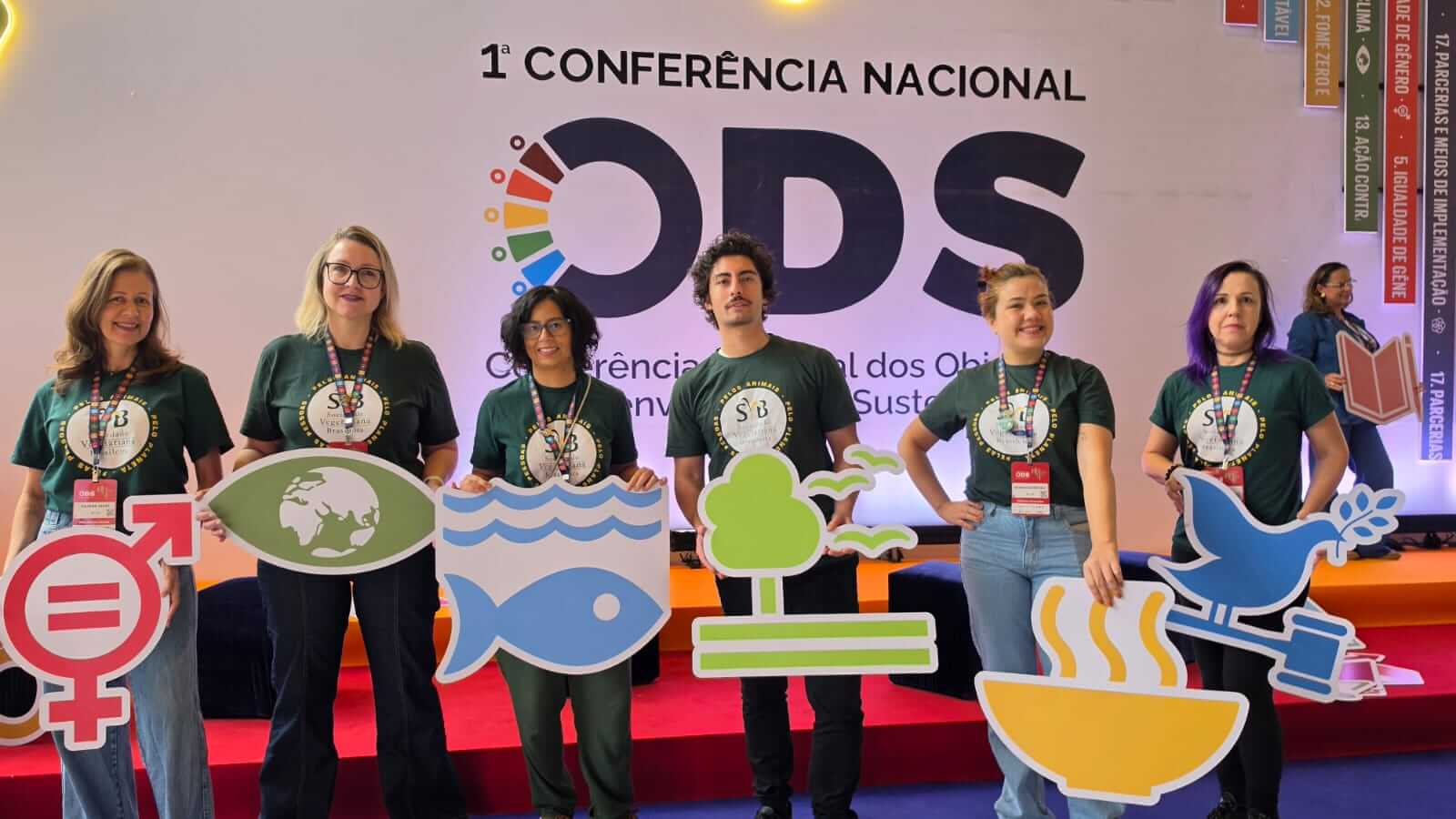
- The February 2026 grant from ACE’s Recommended Charity Fund strengthened Sociedade Vegetariana Brasileira’s (SVB) institutional capacity and expanded its ability to advocate for systemic change that reduces the consumption of animal products across Brazil.
- The grant supported the expansion of SVB’s public policy team, including the hiring of a new Government Relations staff member to strengthen advocacy with municipal, state, and federal decision-makers, as well as the implementation of organizational governance improvements and staff retention initiatives.
- During this period, SVB helped secure the approval of sustainable, plant-forward food legislation in two Brazilian municipalities, creating long-term policy frameworks that encourage healthier and more sustainable meals in public institutions.
- SVB is supporting the implementation of two major municipal public-school food policies that reduce animal product consumption, benefiting hundreds of thousands of students through gradual menu improvements and increased availability of plant-based meals.
- Building on partnerships established during previous international climate discussions, SVB launched a nationwide collaboration with community kitchen cooks in 16 cities. The initiative equips public and community food programs with practical knowledge to prepare nutritious, affordable plant-based meals while increasing access to healthy food for vulnerable populations and has already trained 97 solidarity kitchens.
- SVB also played an important advocacy role during Brazil’s 1st National Conference on the Sustainable Development Goals, where a motion calling for the creation of a National Policy for Healthy and Sustainable Food Environments in Public Institutions was officially presented, reinforcing the integration of food system transformation into national sustainability discussions.
- The grant also supports leadership development, volunteer mobilization, participation in strategic national and international advocacy spaces, and investments in organizational capacity, enabling SVB to increase its long-term impact for animals, public health, food security, and climate.
The Humane League
$314,162 grant

Between February and July 2026, The Humane League (THL) utilized its $314,162 grant from the Recommended Charity Fund to advance corporate accountability, policy reform, and movement building to eliminate animal suffering.
- Corporate Accountability Campaigns: THL’s corporate advocacy compelled grocery giant Ahold Delhaize to end battery cage and gestation crate use — sparing 5 million hens and thousands of mother pigs annually. THL built on this momentum by launching a campaign targeting Kroger, and its subsidiary Harris Teeter, to help its 15 million caged hens, which is well underway. Internationally, the Open Wing Alliance (OWA) launched a creator-led campaign in South Korea targeting CJ Group to drive cage-free progress across Asia, worked with alliance members to pressure Unilever to reinstate its global cage-free commitment, and got Best Western to purchase cage-free egg credits to stay on track with its cage-free commitments.
- Policy & Grassroots Advocacy: THL mobilized nationwide grassroots pressure in Washington, D.C., to protect state-level animal welfare laws in the federal Farm Bill. This advocacy compelled key congressional leaders to publicly oppose the Save Our Bacon Act and led to the official withdrawal of the bill’s lead sponsor. Additionally, working through the Animal Policy Alliance (39 member organizations across 22 states), THL helped defeat eight anti-animal state bills and collaborated on a pioneering ban on industrial octopus farming.
- Global & Movement Support: Celebrating its tenth year, the Open Wing Alliance supported 28 grantees, who received over $2 million in grants, across 30 countries, powering 130 new global cage-free commitments so far this year.
Wild Animal Initiative
$339,295 grant

Wild Animal Initiative recently published its 2025 report. Read more here.
Presented at high-impact conferences
- Wild Animal Initiative presented at the NYU Wild Animal Welfare Summit, connecting with experts across the sciences, humanities, and policy to advance the field.
- Researchers attended the 10th International Conference on Wildlife Fertility Control in Barcelona, hosted by the Botstiber Institute, where they learned about a promising new oral, species-specific chemosterilant for rodents under development in New Zealand.
- They attended the Science for Animal Welfare Conference (formerly UFAW) and its associated LIFT workshop in London, recruiting new collaborators for future welfare research.
- Staff presented at the Ecology and Evolution of Infectious Disease Conference at Virginia Tech, introducing wild animal welfare science to an audience of disease ecologists.
2026 grants awarded
- Wild Animal Initiative awarded 13 new research grants totaling $727,658 in funding. Projects include studying welfare indicators for wild insects, urban rats, and neotropical frogs.
Key research projects
- Published “Welfare implications of injuries and deformities in wild fish” in the journal Animal Welfare (April 2026), establishing a first estimate of how common these indicators are in wild fish populations.
- Published “Ready to go wild? Factors affecting the representation and contribution of veterinarians in a selection of wildlife-oriented research disciplines” in Research in Veterinary Science (August 2026), examining what helps and hinders veterinarians in contributing to wildlife research.
- Published “The emerging field of wild animal welfare science” in Trends in Ecology & Evolution (June 2026), laying out the field’s core principles for scientists and practitioners.
We hope that you are inspired by these achievements! If you want to fuel more positive progress for neglected animals, please support ACE’s Greatest Needs Fund and share this update with a friend. Your action today will help reduce animal suffering tomorrow. Thank you!
Give Where the Need Is Greatest

ACE is dedicated to creating a world where all animals can thrive, regardless of their species. We take the guesswork out of supporting animal advocacy by directing funds toward the most impactful charities and programs, based on evidence and research.


Table of Contents